Big Walk Party Size Dynamics
Two-player intimacy, four-player puzzle scaling, and twelve-player beautiful chaos explained.
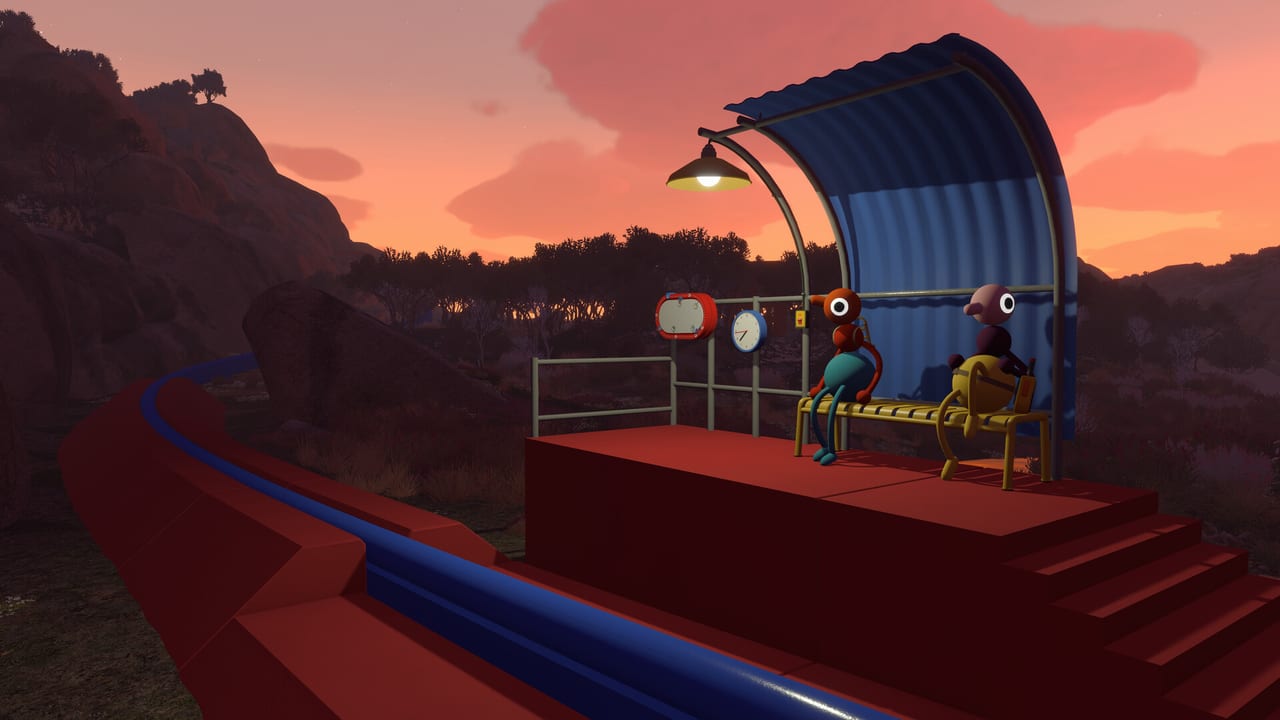
Big Walk supports two to twelve online players in one session, but House House does not treat every headcount the same. Puzzles scale down for smaller groups, while large lobbies still encounter challenges authored for roughly four simultaneous solvers—even when a dozen friends show up waving cowbells on the ridge line. Understanding those differences prevents frustration when your twelve-person Discord squad cram into a room meant for focused teamwork.
This guide compares 2-player, 4-player, and 12-player dynamics across puzzles, tools, voice chat, pacing, and social roles. Pair it with Party Prep Planner for loadouts and Hosting a Session for lobby management.
Host world configuration: 2 / 3 / 4+
When the host starts a session they choose a 2 player, 3 player, or 4+ player version of the world. Official FAQ guidance: treat that choice as the minimum number of players who will keep participating, not a hard maximum. Some island elements adapt to that setting. If friends will drop mid-evening, pick a lower configuration so the remaining party is not stuck in a world tuned for a fuller roster. Connection steps for getting everyone in: Connection Fixes.
Baseline design: the four-player puzzle
Preview coverage and launch reviews consistently describe Big Walk’s puzzle authoring as four-player centric. That does not mean four is the maximum—it means:
- Logic gates, switch counts, and information splits assume about four active brains.
- Smaller groups receive scaled-down variants so duos are not soft-locked.
- Larger groups must self-organize—some players solve, others scout, others meme with megaphones.
If you arrive with twelve friends expecting everyone to touch every lever, redirect extras to Island Navigation scouting or tool courier roles outlined below.
Two-player sessions
Puzzle feel
Two-player Big Walk is the focused co-op experience Steam highlights. Scaling reduces parallel steps so partners can see most puzzle state without triangulating three teams. You will still split occasionally—soundproof glass, dual-path caves—but reunions happen quickly.
Voice and tools
Proximity chat often covers short separations without radios. One shared walkie-talkie passed between partners frequently suffices. Megaphones are overkill; laser pointers and a single flare still help when one player climbs while the other searches ground level.
Loadouts: see the duo row on Party Prep Planner. Prioritize Walkie-Talkie plus one silent tool.
Pacing and tone
Duos experience the most intentional quiet walking. Downtime between landmarks becomes conversation rather than crowd noise. House House’s anti-Discord guidance matters most here—proximity voice carries emotional nuance when only one friend whispers across a valley.
Common pitfalls
- Both players duplicate binoculars and nobody packs a flare.
- Partners refuse to split when puzzles require it, forcing sequence-breaking clutter.
- Skipping Proximity Chat settings and blaming “bad audio” on hardware.
Four-player sessions
Puzzle feel
Four players hit the sweet spot for authored difficulty. Expect genuine splits into two pairs, simultaneous remote switches, and roles like “reader,” “runner,” “spotter,” and “muscle” (Big Walk muscle is still just noodly arms).
Voice and tools
Plan two walkie-talkies minimum—one per pair—and at least one flare plus binoculars on separate players. Silent tools (Signaling Tools) rotate between pairs depending on biome.
This size matches default recommendations on the Tools Tier List without megaphone mandates.
Pacing and tone
Four-player nights feel like board-game table energy: enough banter for comedy, small enough that everyone hears important calls. Host duties stay manageable—one Join Code, one save file, one person tracking Host Saves.
Common pitfalls
- All four crowd the puzzle room while scouts are zero.
- Host also tries to solve every step instead of moderating voice.
- Ignoring Challenge Tips for four-player-specific mechanics.
Twelve-player sessions
Puzzle feel
Steam describes twelve players as “an absolute mess”—affectionately. Puzzles do not scale to twelve independent inputs. Instead, designate a puzzle core of three or four players while others explore, carry tools, or watch for environmental triggers visible only from distance.
Trying to give every player a unique job on every puzzle creates gridlock. Embrace hierarchy for five minutes, then rotate roles so nobody sits out entire sessions.
Voice and tools
Voice chaos is the real boss fight. Megaphones rise to S-tier utility; multiple walkie-talkies layer into squad nets; cowbells help wanderers ping location when they ignore radio discipline.
Use the twelve-player tables on Party Prep Planner—three or more radios, three or more flares, dedicated caller with megaphone.
Pacing and tone
Twelve-player walks emphasize social sandbox over efficiency. Travel time becomes concerts on cliffs; whiteboards accumulate graffiti; someone always fires a flare because they can. Progress may slow, but launch previews celebrate these moments as core Big Walk identity.
Schedule longer real-world time blocks. A puzzle that takes twenty minutes with four players might take forty with twelve unless command roles enforce focus.
Common pitfalls
- No command structure—twelve people shout over proximity chat.
- Puzzle tourists stand in doorways blocking camera lines.
- External Discord removes all friction, flattening puzzle design—avoid per Proximity Chat.
- Crossplay mic differences go unaddressed—see Crossplay Platforms.
Mid-size groups: 6 and 8 players
Not requested in the section headers but common in friend groups:
| Size | Behavior summary |
|---|---|
| 6 players | Two trios or three pairs; megaphone useful; puzzle core of 4 + 2 scouts |
| 8 players | Two four-player squads; mirror four-player loadouts per squad |
Treat six and eight as transitions toward twelve-player command structures without full wanderer squads.
Choosing the right size
| Goal | Recommended size |
|---|---|
| Story focus & quiet exploration | 2 |
| Balanced puzzles + banter | 4 |
| Large friend group hangout | 8–12 |
| Speedrun / challenge mastery | 2–4 |
None is wrong—Big Walk adapts socially even when puzzles cap at four active solvers.
Crossplay considerations
Mixed Steam, PS5, and Switch 2 lobbies appear at every size. Smaller groups troubleshoot crossplay faster; twelve-player mixed sessions need Join Code discipline from Crossplay Hub and pre-assigned text fallbacks when mics fail.
Summary
Two players feel intimate and voice-forward. Four players match House House’s mechanical baseline. Twelve players trade efficiency for emergent comedy—if you assign roles, carry tools deliberately, and let puzzle cores work while wanderers explore. Re-read Multiplayer Hub for session basics and Updates Hub when patches change scaling.
Frequently Asked Questions
Quick answers to the most common Big Walk questions.
What is the minimum party size for Big Walk?
Two players. There is no solo mode; you need at least one other person online in the host's session.
Do puzzles scale for twelve players?
Puzzles scale down for small groups but remain authored around roughly four active solvers even in twelve-player lobbies.
Is four players the recommended size?
Four players matches the core puzzle design and balances coordination with social noise for most groups.
Why is twelve-player Big Walk so chaotic?
Large lobbies add social toys and wandering roles without multiplying puzzle complexity. Command structure and tools prevent gridlock.
Where do I assign tools for each party size?
Use the Party Prep Planner at /tools/party-planner/ for role tables covering 2, 4, 6, and 12 players.