Big Walk Tools & Communication Gear
Walkie-talkies, flares, megaphones, backpacks, and every toy that keeps a party talking across the island.
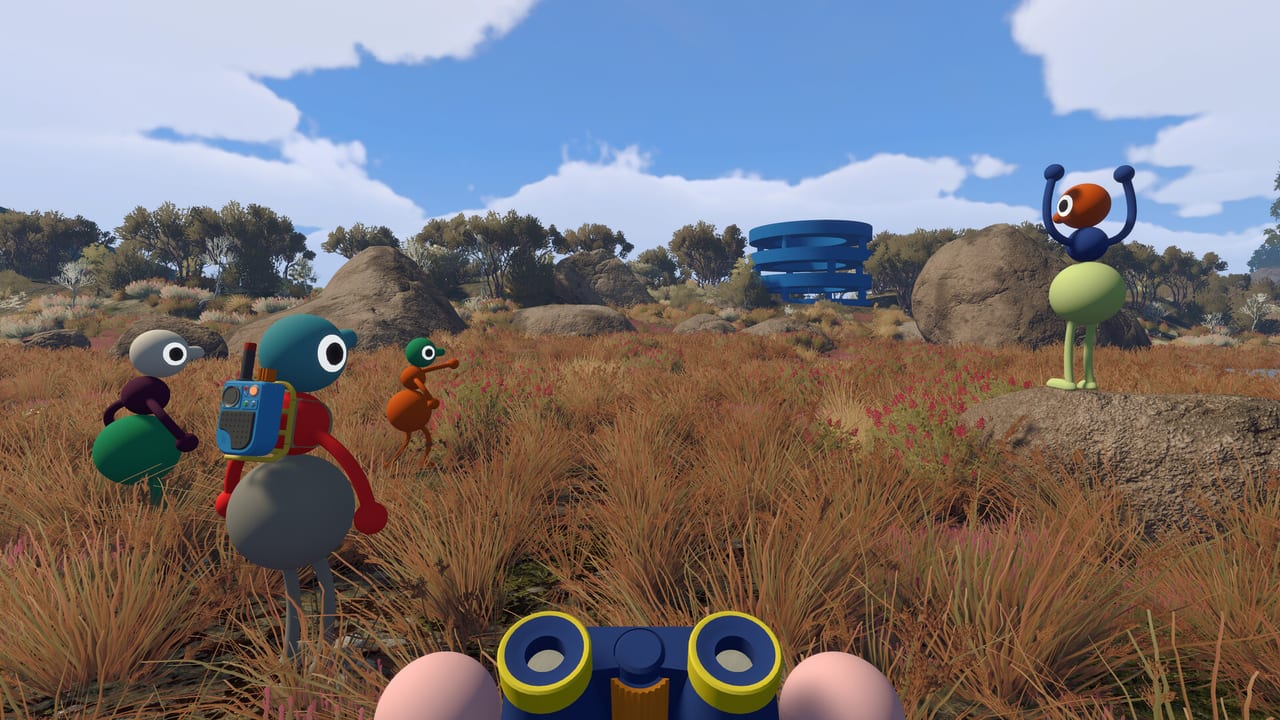
Big Walk is a cooperative walker-talker from House House and Panic where communication is the puzzle. Proximity voice and text chat fade with distance, echo in caves, and cut out behind soundproof glass—so the items you pick up are not cosmetic flair. They are loadout decisions. You can only hold one tool in your hands at a time, which means someone in every group should carry a walkie-talkie, someone else should pack a flare or megaphone, and everyone should know when to swap gear without wasting ten minutes at a crate.
This hub is the starting point for every tool guide on the wiki. Use it to understand what each item does, how tools interact with Proximity Chat, and where to go when your party outgrows a single backpack — start with Backpacks & Waist Bags because inventory is cooperative (teammates dress you). If you are planning a session tonight, jump straight to the Party Prep Planner after you skim the roster below.
Why tools matter in Big Walk
Unlike action games where inventory is about damage numbers, Big Walk treats tools as extensions of conversation. House House strongly encourages in-game voice rather than Discord because puzzles are authored around muffled walls, crackling radios, and moments where you cannot speak at all. When a teammate vanishes behind a ridge, proximity chat alone will not save you—you need a walkie-talkie channel or a flare arc cutting through the treeline.
Limited inventory also creates gentle friction that leads to memorable stories. Reviews describe groups fighting over a single megaphone, dropping a whiteboard mid-puzzle, or navigating at night because nobody thought to bring a light. That chaos is intentional. The island rewards parties that plan loadouts before they split up, then adapt when someone inevitably falls off a ledge and loses their binoculars.
Complete tool roster
These are the major communication and utility items confirmed for the August 4, 2026 launch across Steam, PlayStation 5, and Nintendo Switch 2:
| Tool | Primary role | When to prioritize |
|---|---|---|
| Walkie-talkie | Long-range voice link | Any session with split teams |
| Binoculars | Scout landmarks and puzzle hooks | Navigation-heavy routes |
| Laser pointer | Silent visual marking | Sound-sensitive puzzles |
| Megaphone | Amplify natural voice | Groups of six or more |
| Signal flare | Bright regroup beacon | Open terrain, night walks |
| Whiteboard | Writable silent messages | Glass rooms, stealth sections |
| Cowbell | Audio tracking in brush | Dense forests, hide-and-seek |
| Golden head | Environmental mystery item | Exploration and lore hunts |
House House lists additional toys on the Steam page with playful question marks—expect more surprises as you explore. Treat the table above as your communication core, not a final checklist.
Deep-dive guides
Each child page goes further on mechanics, etiquette, and party size:
- Backpacks & Waist Bags — Blue buildings, buddy-equip rules, dual-gourd holster near Green, and Big Pack tips.
- Walkie-Talkie — Range behavior, channel discipline, and why this item is nearly mandatory for cross-island coordination.
- Signaling Tools — Flares, megaphones, laser pointers, cowbells, and whiteboards compared side by side.
- Tools Tier List — S through C rankings focused on communication utility, not combat power.
- Party Prep Planner — Role assignments for parties of 2, 4, 6, and 12, plus suggested loadout tables and an interactive planner on the page.
How tools connect to multiplayer
Tools do not exist in a vacuum. Party size changes how many duplicate walkie-talkies you need, whether a megaphone beats a second flare, and how often the host should pause for inventory swaps. Read the Multiplayer Hub for lobby basics, then Party Size Dynamics to see how two-player intimacy compares with twelve-player chaos. Hosting responsibilities—including who keeps tools in the host save—are covered in Hosting a Session.
Crossplay groups on mixed platforms should also review Crossplay Platforms before assigning gear. Voice quality is solid on all launch platforms, but Join Code parties often include players on controller-only setups who benefit from laser pointers and whiteboards when typing is awkward.
Loadout philosophy
A healthy Big Walk party follows three rules:
- Never leave camp with zero long-range voice. At least one walkie-talkie should be active before the first split path.
- Carry one regroup tool per four players. Flares scale better than shouting when someone takes a wrong fork.
- Keep a silent option. Laser pointers and whiteboards solve puzzles where megaphones would spoil the design.
When inventory gets tight, consult the Tools Tier List rather than guessing. dropping a cowbell hurts less than dropping your only walkie-talkie.
Related wiki sections
Tools overlap with almost every other category:
- Controls and Gestures & Arms — Pointing and waving when tools are unavailable.
- Island Navigation — Binoculars and flares make sense only if you know where you are going.
- Challenge Tips — Many challenges assume specific communication toys.
- Host Saves — Progress and discovered tools stay with the host’s save file.
Bookmark this hub before your first full evening walk. Update your loadouts when patches add items or rebalance ranges, and always run the Party Prep Planner when new friends join mid-journey.
Frequently Asked Questions
Quick answers to the most common Big Walk questions.
How many tools can I hold at once in Big Walk?
You actively use one handheld item at a time, with limited inventory space overall. That constraint is why parties assign roles instead of everyone grabbing the same walkie-talkie.
Which tool should every party bring first?
A walkie-talkie. Proximity chat fades quickly across Big Walk's open terrain, and long-range voice prevents lost players from eating your session time.
Are Big Walk tools shared or personal?
Tools are physical items in the world. Anyone can pick them up, drop them, or leave them behind, which makes coordination and host saves important.
Does the golden head do anything useful?
It is primarily an environmental mystery and novelty item rather than core communication gear. Bring it for exploration nights, not puzzle-critical sessions.
Where can I plan loadouts before launching?
Use the Party Prep Planner page at /tools/party-planner/ for role tables by party size and an interactive planner widget on the same page.